


Psyops: Nobody dies nobody gets hurt ... unless wanted
It's all about mind control


“All terror is fake.” — Francis Richard Conolly
“If you're not wondering if you're under mind control, you probably are.” — Anon
It’s really not complicated. Nobody who rejects the narrative that a crazy gunman was responsible for 26 deaths at Sandy Hook including those of 20 young children believes instead that it was the orchestrators of the event who were responsible for the alleged deaths, do they? No, that would be absurd. As stated by the title of a collection of essays, a number authored by academics:
Nobody Died at Sandy Hook: It Was a FEMA Drill to Promote Gun Control.
(Whether it was to promote gun control or simply press people’s buttons on both sides of the argument Divide-and-Conquer style I cannot say, however, we know nobody died and it was a lockdown drill.)
To see how mass casualty events can be staged using companies such as Crisis Cast and Crisis Solutions see CASTING CRISIS: Orlando’s Actors, Agents and Casualty Role Players.
So if they didn’t need to kill the little children at Sandy Hook to make the majority believe a terrible tragedy occurred there why would they kill people in other events recognised as psyops simply to make them believe in their deaths?
Answer: they wouldn’t.
Why would the deaths be real?
Let’s start with the reasons a significant percentage of the disbelievers of official stories who attach strongly to belief in real deaths present for their attachment.
1. They wouldn’t care about killing the people
No one can argue with that claim - the perps certainly don’t care about the people - or rather in the case of the covid jab, at least, seem to deliberately wish to injure, maim and kill them, however:
1. Who said anything about caring?
2. An absence of one reason doesn’t mean there aren’t other reasons for not doing something
I must say that failure on two counts of basic logic in this common knee-jerk response pains me.
2. They would kill them for greater realism
Horror movies don’t require real deaths, they’re all about make-believe and psyops work on the same principle. They don’t need real deaths, it’s all about trauma created through narrative construction. That’s why they’re called psyops.
3. The deaths are ritual sacrifices
There’s evidence that those in power conduct ritual sacrifices but psyops are often in the form of “live” drills and are not conducive to that kind of horrific event.
4. People know someone who allegedly died or people connected to them … and the alleged dead people cannot simply “disappear”
I know people connected to people who allegedly died in six! events, two of whom went to the funerals of the alleged dead, however, it is not only entirely consistent with but completely expected of reality that ordinary people will know people connected to these events. In big events especially, there will be numerous people playing the roles of “witness”, “miracle survivor”, “hero”, “loved one”, etc. These actors are real people playing a role and people will know them - in the case of big events about which there is great controversy, “loved ones” will be sure to make the acquaintance of those few prominent people arguing against the mainstream narrative.
There are numerous reasons for people to participate in these events, eg, waiving of crime penalties and gambling debts, and just as people in Witness Protection Programs “disappear” so can people in these events. Sometimes, they don’t even make much of an effort, in fact, to “disappear”, maintaining - in extraordinarily brazen fashion - the same name as in the case of the faked 1986 Challenger disaster. If you come across someone who supposedly died what would you do about it? Report it to the media and police? What would you expect to happen? That the media will publish this big news just as they’ve published that 9/11 wasn’t really the work of 19 terrorists armed with boxcutters?
In psyops, where the number of alleged deaths is very large, the evidence shows a significant number of people will be agents or fabricated one way or another. Examples of fabricated people who allegedly died on 9/11 include: Todd Beamer (UA93), Mark Bingham (UA93), Betty Ong (AA11), Kazuhiro Anai and Takuya Nakamura (North Tower). For a detailed analysis of all 9/11 simulated victims (vicsims) see The Vicsim Report.
5. Deaths would be difficult to avoid and it would be much easier to kill them for real
Generally no, difficulty in avoiding death is an illusion and, in practical terms, considering the people they would need to involve, it wouldn’t be easier to kill them. They want to have a significant number of minions playing roles, they help grease the wheels of their operations. Moreover, they make lots of money from the fundraising for the fake victims, $28 million being one estimate reported for Sandy Hook, for example, although I would imagine this is a conservative figure considering the media coverage. Also, they need to conduct drills and “live” drills can be more educative than standard ones so it’s a double win: conduction of an educative “live” drill pushed out as a real event that raises lots of money for the fake victims.
$28 million for the deaths of 26 people, 20 of them small children with no dependants? That people’s minds turn to mush over deaths made a fuss of by the media makes them sitting ducks for psyops. The infamous Robbie Parker, hyperventilating before the cameras, twice mentioned a fund-raising page for his daughter in his 17-minute press conference the day after her alleged death with no significant mention of anything else.
Why wouldn’t the deaths be real?
There are a number of very good commonsense reasons for not killing the people for real, some alluded to above.
1. Psyops are about mind control not doing things for real unless wanted
The meaning of the term psyop must be given full consideration. (Unsurprisingly, the propagandists don’t use the term “psyop analyst” (what I call myself) but “conspiracy theorist” because - don’t you know - psyops aren’t a thing and anything presented against the official narrative must exist only in the realm of theory.)
Psyops are about making us believe things that aren’t true, not actually doing them for real in order that we believe them … unless wanted, of course. If they kill people and we recognise the deaths where is the mind control? There is none. Interestingly, in an interview with the hypnotist, Derren Brown, he mentioned what drew him to hypnotism was the element of control. They want to control our minds so, a priori, there is simply no good reason to kill people for real unless it was difficult or impossible to make us believe in the deaths without doing it for real. And the evidence is utterly overwhelming that they can make us believe in fake deaths … nothing, in fact, could be easier, when we consider the deliberately sloppy job they do of it, for example, a few smears of red we’re shown to indicate an alleged massacre of 26 people at Sandy Hook.
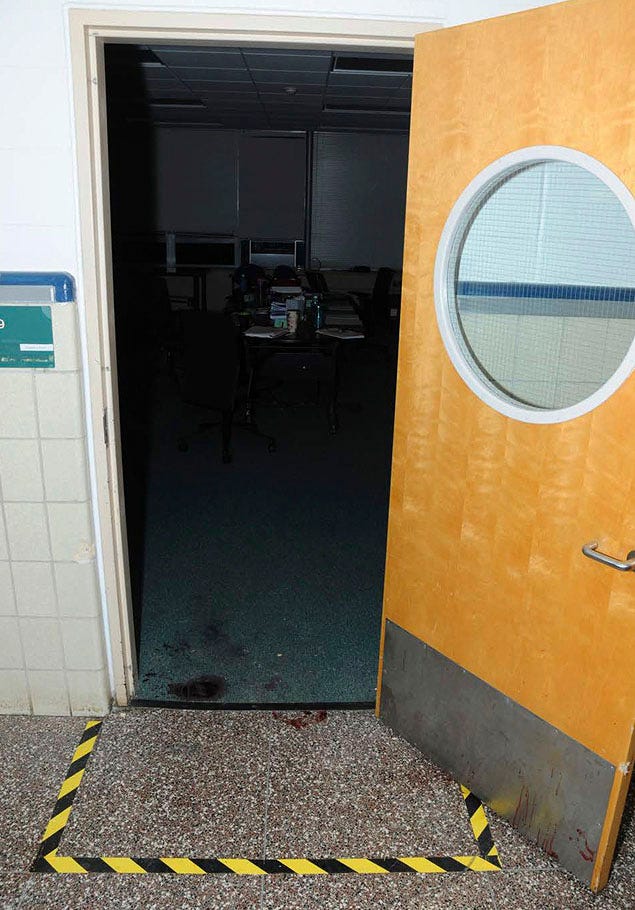
Psyops such as Sandy Hook and 9/11 are specifically known as Trauma-based Mind Control Psychological Operations. In the case of 9/11, why would the element of mind control relate only to the people responsible, why wouldn’t they extend the mind control to the nature of the actual event in that it was essentially a demolition job cum massive Full-Scale Anti-Terror Exercise pushed out as a real attack, and stage the event in a similar way to the Sandy Hook hoax except with the huge reality of building destructions?
If you believe in real death and injury, please reflect on that belief and whether mind control is playing a role in it. Have you done due diligence in determining whether real or fake? Are you anchored in the belief that rogue elements of the US government and their cronies cold-bloodedly and callously left those poor people in the buildings to die? As one of the thousands - millions perhaps - of disbelievers of the official story anticipated by the perps, do you not think that you might have been targeted to hold that belief in order to keep the truth in a stalemate position? Anchoring in belief is fatal for those analysing power - they use every trick in the book and one must exercise agility of mind to follow them … although ultimately it isn’t really all that complicated.
2. Control of the narrative is extremely important and it’s easier to control the narrative when deaths are faked
Admittedly, there isn’t quite the hue and cry I’d expect from those injured and maimed by the jab and loved ones of those who’ve been killed by it. Sure, there’s an outcry but it’s not as loud as I would have expected, however, the fact that most of us have been willing to go along with the narrative until too late - unfortunately for some - in addition to the general acceptance of the fraudulent germ theory, which so much of our belief about medicine is based on, means that the enormous magnitude of the crimes arising from the alleged covid pandemic is muted to a reasonable degree.
A loved one dying from a jab with centuries of medical propaganda behind it is a very different context from a loved one dying in the destruction of a building which is clearly a controlled demolition. In this case we might imagine that the loved ones of those who would have died in the twin towers would catch on pretty quickly and would waste no time rattling the gates of the Capitol. In 20 years how many alleged loved ones have been making noise and what has resulted? Not very many and a big fat zero. The alleged loved ones are simply actors making “noises” that are not meant to achieve anything.
Actors making “noises” is a controlled situation while real loved ones of a significant number of people killed in planned destructions is a very uncontrolled situation.
3. Psyops are an ongoing phenomenon requiring continual recruitment
How do you recruit people for psyops when people are killed in them? Might the potential recruitees not think they could be killed too and it’s not as if the people employed in these events are all callous mercenaries, a lot of them are clearly pretty ordinary people. Wouldn’t the recruiters want to be able to say to the recruitees, “Hey, it’s all OK, nobody dies, nobody gets hurt, it’s all staged.”
4. Killing people is often impracticable if not, essentially, impossible in the context
Amongst the disbelievers, do we all agree that 9/11 was essentially a demolition job? 9/11 was a demolition job. 9/11 was a demolition job. 9/11 was a demolition job.
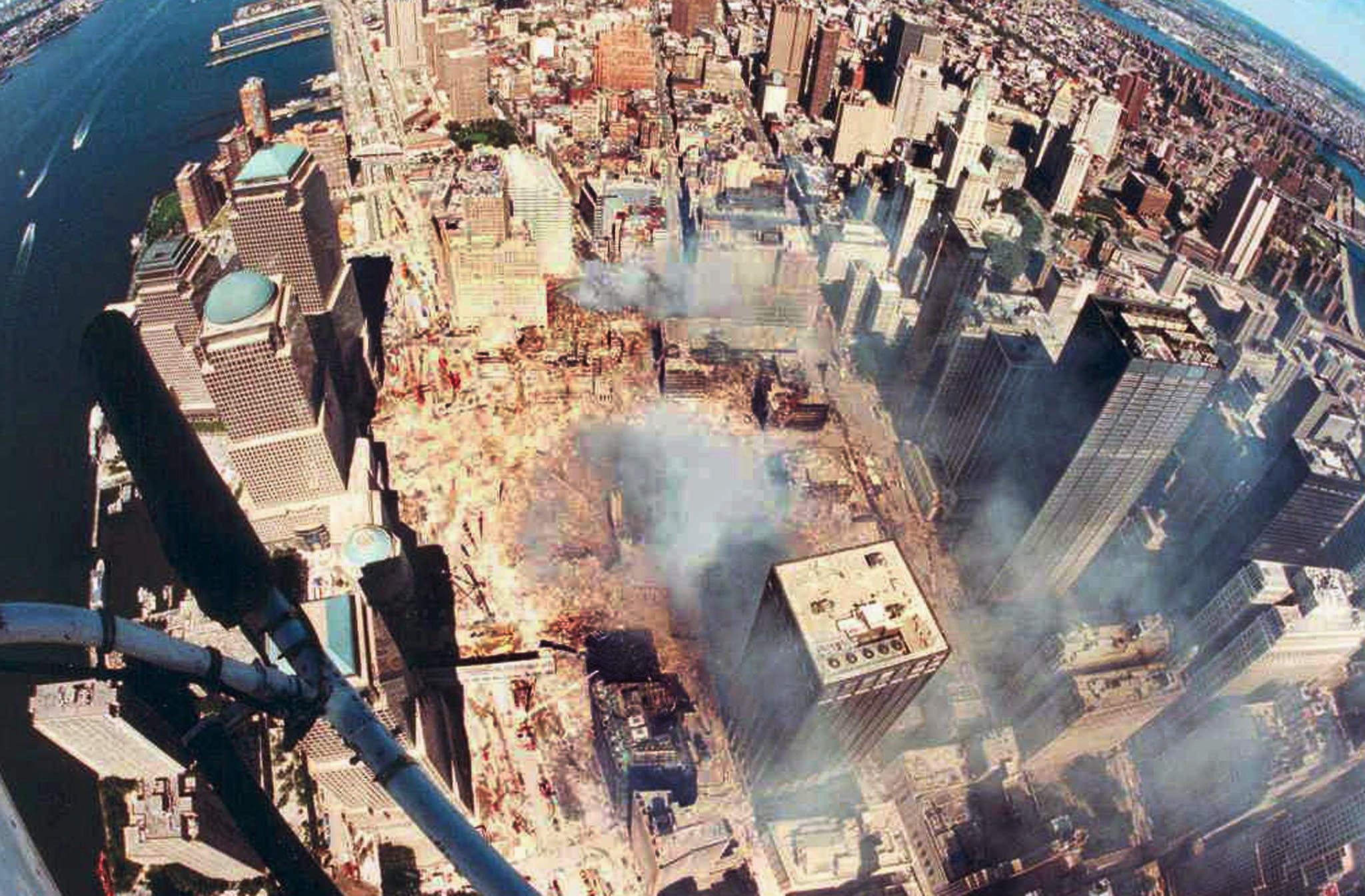
What is standard practice in demolitions?
Standard practice is to FULLY evacuate the buildings and surrounding areas, not partly evacuate them.
Disbelievers mock the notion that high rise steel frame buildings came down by fire on the only day in history on 9/11. However, how about the notion that on the only day in history, demolition crews agreed to leave people in buildings and surrounding areas for the sake of a terror story … when the evidence clearly shows that people don’t need to be killed in order that we believe they were?
We’re told that Controlled Demolition Inc (CDI), a company proud of its four world records in large building demolition projects - three occurring in the three years before 9/11, Villa Panamericana & Las Orquideas, Puerto Rico (1998), J.L. Hudson Department Store, Chicago (1998) and the Seattle Kingdome (2000) - and its safety culture, presented a cleanup plan 11 days after the fateful day (note we’re told 11 days, not the date). You don’t think CDI might have played a major role in the demolitions themselves, do you?
And demolition crews were not the only people involved, of course, a significant number of people needed to be complicit or otherwise involved including agency staff, media personnel, corporations, the Port Authority and on and on.
What’s the evidence?
Ultimately, of course, it makes not a jot of difference how cogently one argues for which approach - faking or doing for real - makes more sense, it’s the evidence that counts! The evidence is king … and the evidence clearly says they fake it. In fact, they TELL us they fake it, according to their rule of Revelation of the Method, as indicated by Robbie Parker’s hyperventilation and red smears for a 26-person massacre at Sandy Hook … and so many other indicators in that ludicrous narrative.
For evidence of 9/11 fakery of death and injury I have a page with links to my own work as well as others’.
For other events see page, The Published Research of Miles W. Mathis compiled by substacker, Dawn French and my page Chronology of Psyops.
Related reading:
And they even staged a trial with a blubbering Alex Jones receiving a crazy amount financial penalty for asking questions about Sandy Hook. He played his part there too scare everyone else from officially questioning any staged theatrical tragedy.
Very thoughtful and well presented piece! Miles Mathis causes me no end of bother in my mind though - his pieces are a maddening mixture of common sense and weirdness and his site just does not say "convincing" does it? However, I have actually talked to him - he suspected me of being an agent because of the people I'd managed to speak with through doing a biography of a guy who knew just about everybody in 60s London :-) We also talked about Paul McCartney and he was adamant Sir Paul is the very same guy, but he did offer to put one of my articles up on his site if I could convince him otherwise! I was impressed by his Lennon piece. When I spoke later to Peter McNamee, the director of Let Him Be, he (obviously) told me the film was entirely fictional (speaking in a very Lennon-esque voice on the phone) It is so very hard to sift through stuff:-/